HTTPS vs HTTP: Why Is Website Security Important?
Every time we visit a website, share information, log in to an account or make an online payment, security plays an important role. But have you ever noticed that some website URLs begin with HTTP while others begin with HTTPS?
The difference between HTTP and HTTPS is more than just one letter. It determines how information travels between a user’s browser and a website’s server.
Today, website security is essential for businesses, developers and online users. HTTPS helps protect sensitive information, builds user confidence and provides a safer browsing experience.
Let’s understand how HTTP and HTTPS work, their differences and why every modern website should use HTTPS.
Table of Contents
- What Is HTTP?
- What Is HTTPS?
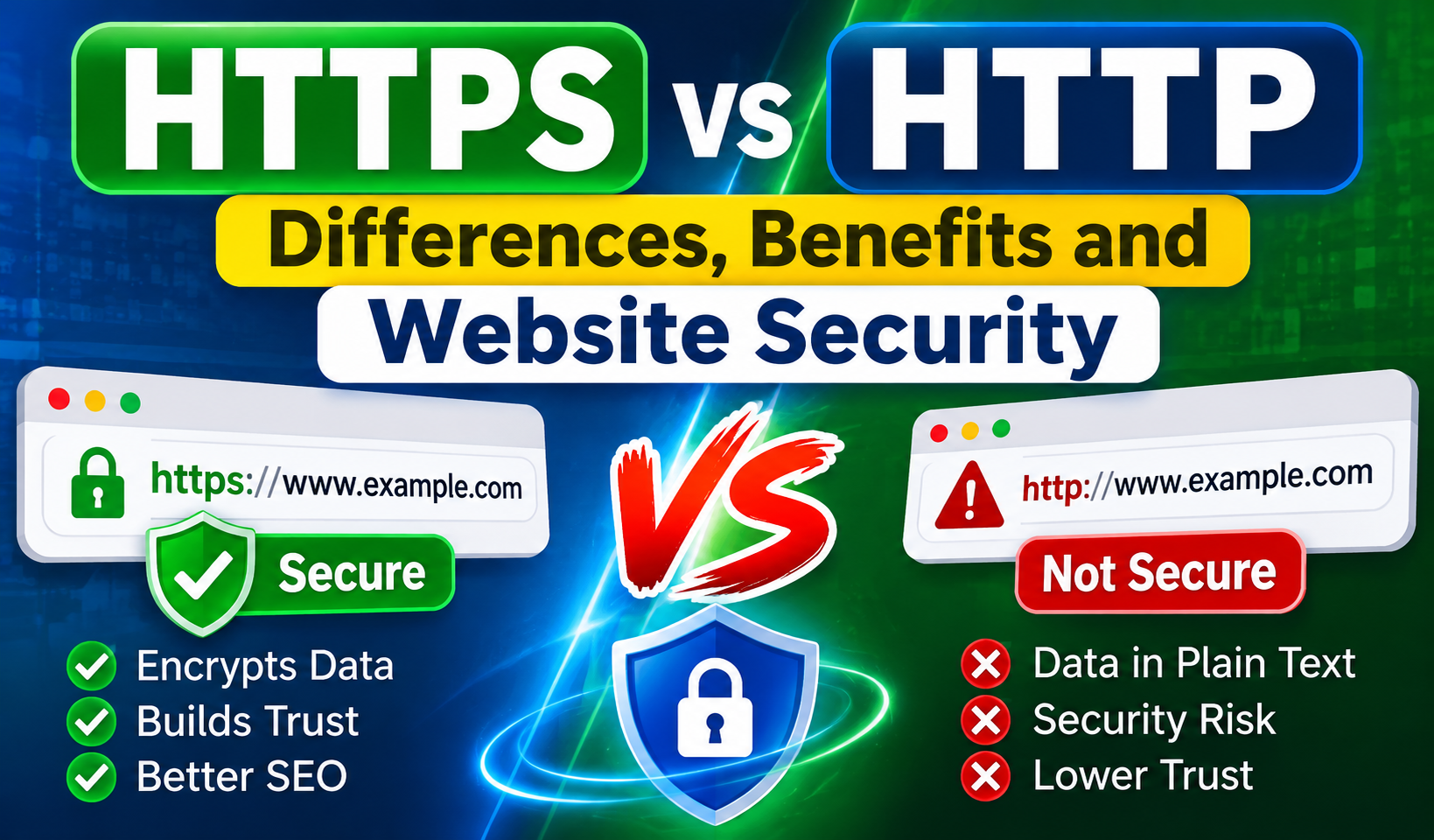
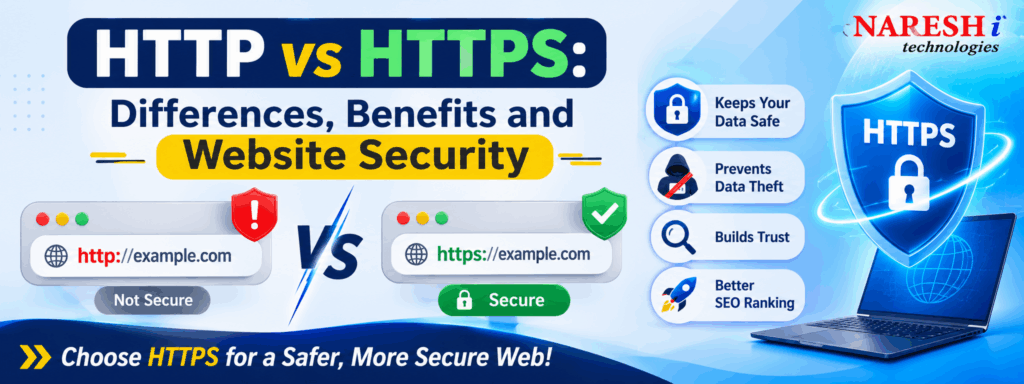
- HTTP vs HTTPS: Key Differences
- Why Is HTTPS Important for Website Security?
- How Does HTTPS Work?
- How Can Developers Secure a Website?
- Frequently Asked Questions
What Is HTTP?
HTTP stands for Hypertext Transfer Protocol. It is a communication protocol that allows web browsers and web servers to exchange information.
For example, when someone visits a website, the browser sends a request to the server, and the server responds with the requested webpage.
However, traditional HTTP does not encrypt the information being transferred. This means attackers may be able to read or modify data while it travels across a network.
What Is HTTPS?
HTTPS stands for Hypertext Transfer Protocol Secure. It is the secure version of HTTP that uses Transport Layer Security (TLS) to protect communication between browsers and web servers.
HTTPS provides three important security benefits:
- Encryption: Protects information from being read by unauthorised people.
- Authentication: Helps users verify that they are communicating with the intended website.
- Data Integrity: Helps prevent information from being secretly modified during transmission.
Websites commonly use TLS certificates to establish secure connections. These certificates help browsers verify a website’s identity.
HTTP vs HTTPS: Key Differences
Feature | HTTP | HTTPS |
Full Form | Hypertext Transfer Protocol | Hypertext Transfer Protocol Secure |
Security | No built-in encryption | Uses TLS encryption |
Data Protection | Data can be exposed during transmission | Protects data during transmission |
SSL/TLS Certificate | Not required | Required for HTTPS |
Website URL | Starts with http:// | Starts with https:// |
User Trust | May show security warnings | Provides a more secure browsing experience |
Common Usage | Legacy websites | Modern websites and applications |
Why Is HTTPS Important for Website Security?
HTTPS is important because it protects communication between users and websites
Protects Sensitive Information
Websites often collect personal details, login credentials and payment information. HTTPS encrypts data during transmission, making it harder for attackers to access that information.
Builds User Trust
Users are more comfortable interacting with websites that provide secure connections. Browser security indicators and the HTTPS address help users identify encrypted connections.
Helps Prevent Man-in-the-Middle Attacks
A man-in-the-middle attack occurs when an attacker attempts to intercept communication between two parties. HTTPS helps protect against this by encrypting data and authenticating the website.
Supports SEO and Website Performance
HTTPS is a lightweight Google Search ranking signal. Moving to HTTPS can support website security and user confidence, although it does not guarantee higher rankings.
Supports Secure Web Applications
Modern applications use HTTPS to protect communication involving login systems, APIs, online forms and cloud-based services.
How Does HTTPS Work?
HTTPS uses TLS to establish a secure connection between a browser and a web server.
The basic process involves these steps:
- A user visits a website using an HTTPS URL.
- The browser and server begin a TLS handshake.
- The server presents its digital certificate.
- The browser checks the certificate and verifies the server’s identity.
- Both sides establish shared encryption keys.
- Data is exchanged through an encrypted connection.
This process helps protect information while it travels between the browser and server.
How Can Developers Secure a Website?
Website developers should follow essential security practices to protect websites and user information.
- Install and maintain a valid TLS certificate.
- Redirect HTTP traffic to the HTTPS version using a permanent 301 redirect.
- Enable HTTP Strict Transport Security (HSTS) where appropriate.
- Avoid mixed content by loading scripts, images and other resources securely.
- Keep website software, plugins and frameworks updated.
- Follow secure coding practices and regularly test website vulnerabilities.
HTTPS is an important security layer, but it does not protect a website from every cyberattack. Developers must also implement authentication, access controls, secure coding and regular security testing.
Frequently Asked Questions
What is the main difference between HTTP and HTTPS?
HTTP transfers information without built-in encryption, whereas HTTPS uses TLS to encrypt communication and authenticate the website.
Why is HTTPS important for a website?
HTTPS protects information during transmission, improves user confidence, helps prevent data interception and supports secure website communication.
Does HTTPS improve Google rankings?
Yes. HTTPS is a lightweight Google Search ranking signal. However, using HTTPS alone does not guarantee better search rankings.
What is an SSL certificate?
An SSL certificate is a digital certificate used to establish a website’s identity and enable encrypted connections. Modern HTTPS connections use TLS, which replaced the older SSL protocol.
Can a website be hacked even with HTTPS?
Yes. HTTPS protects data during transmission, but it cannot prevent all website attacks, such as SQL injection, malware infections or weak password attacks.
Is HTTPS necessary for small business websites?
Yes. Even small business websites should use HTTPS to protect visitors, secure contact forms and establish a trustworthy online experience.
Conclusion
Website security is no longer optional in today’s digital environment. Understanding HTTPS vs HTTP helps website owners and developers make better decisions about protecting user information.
HTTPS provides encryption, authentication and data integrity through TLS. From business websites to e-commerce platforms and web applications, using HTTPS is an essential step towards building a safer online experience.
For students and aspiring web developers, learning about HTTP, HTTPS, SSL/TLS certificates and website security is an important part of developing secure web applications.
What do you think is the most important website security practice apart from HTTPS? Share your thoughts in the comments.
Follow NareshIT for more updates on web development, programming, cybersecurity and emerging technologies.